
Customer analytics is no longer just a reporting function. When you combine modern customer data analysis with AI and unstructured data, you get real-time visibility into customer behaviour, sentiment, and value. In this article, we explain what customer analytics is, the main types of customer analytics, which types of customer data you really need, and how to use them to improve customer experience, reduce customer churn, and grow customer lifetime value. If you want a practical, non-hype view of data & AI for customers – keep reading.
- 1. What is customer analytics, and why does it matter today?
- 2. What types of customer data should you collect?
- 3. Types of customer analytics: from descriptive to prescriptive
- 4. How do you actually analyze customer data?
- 5. The key benefits of customer analytics for your business
- 6. How customer analytics improves customer experience
- 7. Customer analytics tools
- 8. Collecting and storing customer data securely
- 9. Real-world examples of customer data analytics
- 10. Key challenges of customer analytics
- 11. Getting started with customer analytics
- 12. The future of customer analytics
- 13. Summary
What is customer analytics, and why does it matter today?
At its core, customer analytics is the process of turning raw signals from your customers into business decisions. Put simply, analytics is the process of using data to generate a meaningful view of the customer so that you can make better choices about products, service, and communication. Modern customer analytics spans digital channels, support, sales, and even offline interactions – giving a much richer picture than a simple monthly report.
In practice, analytics involves collecting, cleaning, and analysing customer interactions, then feeding the results back into operations. When done well, customer analytics helps you turn scattered events into structured knowledge: which customers are at risk, what drives customer satisfaction, when to act to protect customer retention, and which offers perform best. This is what makes effective customer analytics a strategic capability, not a “nice to have” dashboard.
Imagine a retail bank reviewing its quarterly dashboard.Churn is up by 2%. Conversion is flat. NPS dropped slightly. On paper, nothing looks dramatic – but something feels off. Only when the team digs into customer analytics beyond surface-level metrics do they notice a pattern: customers who recently contacted the call center about mobile app issues are quietly moving their savings elsewhere. No formal complaints. No angry emails. Just silence – and then churn. This is where customer analytics stops being a reporting exercise and starts becoming an early warning system.
The benefits of customer analytics have grown as customers moved online. Switching banks, telcos or retailers is now a few clicks away; your customer base is more fluid than ever. Companies that rely purely on gut feeling struggle to keep up with evolving customer behaviours and preferences. In contrast, data-driven organizations use customer analytics to understand why people stay, why they leave, and how to improve customer outcomes across the entire customer journey.
What types of customer data should you collect?
To do serious customer analytics, you first need the right raw material. Customer data is an essential asset – but only if it actually reflects how people use your services. The most valuable types of customer data typically include:
- Profile & demographic data – age, location, segment, account type.
- Transactional data – purchases, payments, product usage.
- Behavioural data – clicks, sessions, app flows, customer behaviour data in digital channels.
- Unstructured signals – emails, chat logs, call transcripts, customer feedback surveys, social comments.
These categories form the foundation for customer data analytics. Classic analytics tools focused mostly on web traffic, but modern setups enrich that with deeper examples of customer data – such as tone of voice in a support call or topics recurring in complaints. This kind of customer data from various sources allows you to better understand customer expectations instead of guessing.
The process of collecting this data has to be deliberate. Randomly trying to collect data “just in case” quickly becomes a burden. Instead, you should collect data that maps to clear questions: how people use your app, when they drop off, which features correlate with loyalty. Over time, companies can use customer data to better match offers to customer needs and identify new opportunities in their products and services.

Collecting customer data is one thing – making sense of it is another
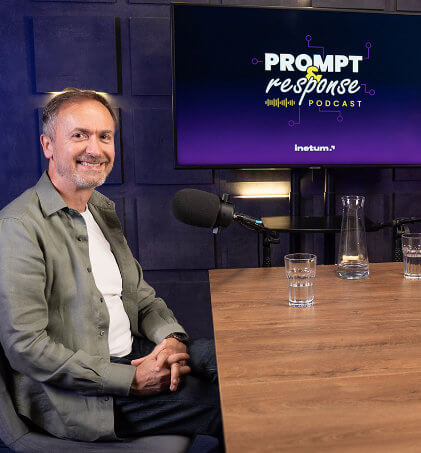
If you want to understand how to move from raw feedback to actionable customer insights, don’t miss the latest episode of Prompt & Response webcast. It’s a practical deep dive into customer analytics that actually delivers.
Types of customer analytics: from descriptive to prescriptive
Not all analytics is the same. Understanding the main types of customer analytics helps you choose the right methods for each problem. In a typical maturity model you’ll find four layers:
#1 Descriptive analytics answers “what happened?”. It aggregates and summarizes historical customer data: revenue by segment, tickets by topic, NPS by region. This is where tools like Google Analytics started, and where most organizations still spend the majority of their time.
#2 Diagnostic analytics asks “why did this happen?”. It explores relationships in the data – for example, which changes in onboarding flow led to lower customer satisfaction, or which touchpoints in the customer journey correlate with complaints. This helps you understand customer reactions instead of just observing metrics.
#3 Predictive analytics estimates “what is likely to happen next?”. Predictive customer analytics can forecast customer churn, customer lifetime value or conversion probabilities in specific customer segments.
#4 Prescriptive analytics suggests “what should we do?”. It connects patterns to actions: who to contact, with what offers, through which channels.
Together, these types of customer analytics provide visibility and guidance across the entire customer journey.
How do you actually analyze customer data?
The mechanics of customer data analysis vary by industry, but the principles are similar. First, you collect and analyze customer data that is directly tied to a business question. Then you enrich it with additional context (segments, channels, lifecycle stage) and start analyzing customer patterns.
Modern teams analyze customer data across structured and unstructured sources. On the structured side, they track funnels, flows and key events. On the unstructured side, they use language models to analyze customer reviews, complaints and chats. This analyzing customer interactions produces qualitative insights that numbers alone can’t show – for example, specific phrases that signal frustration or delight.
In our Prompt & Response webcast, we discussed how GenAI accelerates the process of collecting and analyzing customer feedback at scale. Instead of manually reading thousands of comments, AI can summarize themes, detect customer sentiment shifts, and highlight risks or opportunities. That’s where analytics provides not just charts, but concrete next steps.
The key benefits of customer analytics for your business
When done well, customer analytics delivers value far beyond reporting. It directly supports growth, profitability and resilience. Here are some of the most important outcomes that customer analytics helps businesses achieve:
Stronger retention and loyalty.
With the right models, you can detect early signs of customer churn, anticipate issues and act before people leave. This protects customer lifetime value and builds customer loyalty by showing that you react to problems quickly. Over time, this raises overall customer experience instead of treating churn as an unavoidable cost.
More efficient acquisition and marketing efforts.
By understanding which behaviours lead to purchase, you can design smarter marketing campaigns and align product analytics with the channels that drive results. Customer analytics helps organizations focus their marketing efforts on segments with real intent, instead of broadcasting to everyone. This also supports targeted customer acquisition strategies.
Better decisions at every level.
From the customer service team prioritizing tickets to executives planning roadmap investments, customer analytics to understand patterns becomes a shared language. It helps decision makers better understand customer behaviour, improve customer outcomes and align around facts.
How customer analytics improves customer experience and the customer journey
One of the most tangible payoffs of customer analytics is its impact on customer experience. By connecting signals across channels, you can create a customer journey that reflects how people actually behave, not how you imagine they behave in slide decks. You can literally create a customer journey map based on real data instead of assumptions.
For instance, by tracking customer interaction paths, support tickets and customer feedback, companies discover friction points they didn’t know existed. They might find that a specific payment step generates confusion, or that a new login flow harms customer engagement. When you design improvements, you can then measure whether they genuinely improve customer experience across the entire customer journey.
Analytics can also help operational teams. A customer service team can use customer analytics to understand which topics are rising, while customer relationship management professionals can use customer data to better personalize outreach. When you then monitor customer sentiment in reviews, chat and social channels, you get a continuous feedback loop that lets you enhance customer trust and experience over time.
Customer analytics tools, data platforms and tech stack
To deliver all this at scale, you need more than spreadsheets. A modern stack combines customer analytics tools and a robust analytics platform or customer data platform (CDP). Classic analytics tool choices such as tools like Google Analytics remain useful for web metrics, but they don’t cover the full breadth of customer data you need today.
A more complete architecture usually includes:
- Data pipelines that collect data from apps, websites, CRM and support.
- An analytics platform or CDP to unify profiles and events.
- ML and AI components for predictive analytics and prescriptive analytics.
- Dashboards and exploratory tools for teams to use customer analytics in daily decisions.
When evaluating customer analytics tools, focus less on buzzwords and more on whether teams can realistically use customer data every day. In the webcast, we stressed that even the best engine fails if people still export everything to Excel. The right stack lets you plug insights directly into marketing campaigns, product experiments and service workflows.
Collecting and storing customer data securely
All of this only works if you store customer data and use it responsibly. Security, privacy and governance are not side topics; they are central to implementing customer analytics at scale. Customers share information on the assumption that you will both protect it and use it to deliver better services.
That’s why collecting and storing customer data must follow clear policies and legal frameworks. You need to store customer information with encryption, access control and transparent consent. You also need to think carefully about which customer data collection practices are truly necessary. It’s often better to collect customer signals that you know how to use than to hoard data you never analyze.
Done correctly, you both store customer data securely and make it available for analytics. The goal is to collect customer information that helps you enhance customer experiences without compromising trust. Many organizations partner with specialists to ensure their customer data securely supports innovation instead of limiting it.
Customer analytics in action: where insights turn into decisions
Customer analytics proves its value not in dashboards, but at the moment a team changes a decision it would otherwise make on instinct.
Several of the situations described below were discussed during the Prompt & Response webcast on voice of the customer, while others build on the same patterns observed across real projects.
Together, they show how customer analytics turns insight into action.
Pharma: improving patient experience in a regulated process
One pharmaceutical company analyzed unstructured customer data from patient forums, social media, and healthcare professional feedback while redesigning a reimbursement application. The initial goal was straightforward: digitize an existing, paper-based process.
Traditional analytics suggested acceptable completion rates. Customer sentiment told a different story.
By listening to real customer feedback, the team identified two critical gaps: a lack of educational content explaining the disease and unclear communication between patients and healthcare professionals.
These insights didn’t come from standard dashboards. They emerged only after unstructured data was included in customer analytics. By addressing these gaps, the company improved the perceived usability of the process and made the solution easier to adopt — without changing regulatory requirements.
This example, discussed during the Prompt & Response webcast, shows how customer analytics can help product teams refine flows and content even in highly regulated environments.
Banking: predicting churn before customers leave
In banking, customer analytics is less about reacting to problems and more about anticipating them.
Banks combine transactional customer data with behavioral signals from mobile and web channels to build predictive models that identify early signs of customer churn. These signals are often subtle: reduced logins, abandoned flows, or changes in transaction patterns — long before a customer formally closes an account.
By applying predictive analytics, banks can score customer accounts based on risk and propensity, allowing teams to prioritize outreach. Instead of running generic campaigns, they focus on the customer segments that need attention most, improving customer retention and protecting customer lifetime value.
As highlighted in the Prompt & Response webcast, this approach shifts customer experience from reactive problem-solving to prevention.
E-commerce: when growth hides friction in the customer journey
The team was running a fast-growing online store. Sales were increasing and marketing performance looked healthy. On the surface, there was no reason to worry.
Then customer churn started creeping up – quietly, without a clear trigger.
Instead of reacting with discounts or assumptions, the team examined customer interaction paths across checkout, login, and post-purchase flows. Behavioural data was reviewed alongside support tickets and open-text feedback.
Two issues emerged.
A single payment step caused hesitation and repeated retries. At the same time, a redesigned login flow — introduced to improve security — interrupted engagement.
Neither problem looked critical in isolation. Together, they explained the churn pattern.
With a clearer view of the entire customer journey, both flows were simplified and measured again. Checkout completion improved. Engagement stabilized. Churn slowed.
Customer analytics didn’t just explain what was happening — it showed precisely where experience design needed to change.
Customer support: when feedback signals a problem — but not the one you expect
Monday morning, the customer service inbox was full. Chat requests kept coming in. Social mentions were rising.
At first glance, it looked like a typical post-release spike.
A closer look at customer interactions revealed a different picture.
By analyzing tickets, chat logs, and reviews together, the team noticed a surge in questions related to a new feature. There were no bug reports — only uncertainty.
Sentiment analysis confirmed the pattern. Customers weren’t frustrated with the functionality itself, but with how it was explained. Without combining structured metrics and unstructured feedback, the issue would likely have been dismissed as noise.
The response was operational rather than technical. In-app guidance was updated. Onboarding messages were refined. Short, contextual tips were proactively shared.
Within days, ticket volume dropped and sentiment stabilized. Feature adoption improved — without increasing pressure on the support team.
From industry use cases to broader insight
Although these examples come from different industries, the underlying pattern is the same. Customer analytics works best when it combines multiple data sources — including unstructured feedback — and when insights are connected directly to operational decisions.
Rather than relying on one-size-fits-all messaging, organizations use customer data to personalize flows, target the right people at the right moment, and adapt faster as customer expectations change.
Key challenges of customer analytics
Despite the clear benefits, the challenges of customer analytics are real. Common blockers include fragmented data, legacy systems, unclear ownership and the habit of treating analytics as an afterthought. Many teams feel that customer analytics is “something BI does” instead of a shared capability across the organization.
Another frequent issue is misalignment between ambition and practice. Leaders talk about AI and predictive analytics, but day-to-day workflows still run on manual exports and gut feeling. In the webcast, we described cases where customer analytics models were technically excellent but operationally useless because decisions happened weeks after the data was produced.
To overcome these challenges, organizations need to connect data, tools and people. That means defining ownership, aligning on a roadmap, and making sure that every insight has a clear “so what?”. When customer analytics helps organizations act within hours instead of months, you start seeing compounding gains in performance and overall customer outcomes.
Getting started with customer analytics
Many teams feel overwhelmed thinking about how to get started with customer analytics. You don’t need a perfect, enterprise-wide setup from day one. A more pragmatic path is to pick one or two concrete use cases where analytics can also help – for example, reducing complaints in one channel, or improving a specific onboarding flow.
From there, you use customer data already available, fill in a few gaps, and run experiments. This is the essence of implementing customer analytics in an agile way: start small, prove value, then scale. Over time, you can expand from one area of the entire customer journey to others, connecting dots and reusing building blocks such as a unified customer data platform.
As your capabilities mature, you’ll move from simple reports to more advanced techniques such as customer segmentation, predictive analytics and prescriptive analytics. The point is not to chase buzzwords, but to build an engine where customer analytics continuously informs product, service and communication decisions.
The future of customer analytics: AI, GenAI and real-time decisions
Looking ahead, the future of customer analytics is clearly shaped by AI and GenAI. Language models make it much easier to process unstructured customer data, generate summaries, and surface insights into customer intent and frustration. They also democratize analytics, letting non-technical teams ask questions, explore customer behaviour, and design experiments faster.
This opens the door for more real-time, predictive analytics scenarios. Instead of monthly reporting, organizations can run predictive customer analytics and active monitoring on a daily basis, adjust flows within hours, and build playbooks around typical patterns. AI-assisted customer analytics turns your data into a living, continuously updated map of insights into customer behaviour across channels.
Ultimately, the winners will be organizations that combine strong governance, secure customer data practices, and a clear focus on using analytics to improve customer outcomes. When you pair that with modern tooling and a culture that values evidence over opinions, customer analytics helps businesses make decisions that are better for both the company and the people it serves.
Summary: what to remember about customer analytics
To wrap up, here are the key points that matter when you think about customer analytics for your organization:
- Customer analytics is the process of turning raw events into decisions across your customer base.
- Customer data is an essential asset – but only if you use it to better understand customer needs and identify the changes that matter.
- The right combination of descriptive analytics, diagnostic analytics, predictive analytics and prescriptive analytics gives you a full picture across the entire customer journey.
- Secure customer data collection, governance and the ability to store customer data safely are non-negotiable foundations.
- With AI and GenAI, you can collect and analyze customer data from unstructured feedback, monitor customer sentiment, and act faster on what you learn.
In short, when you bring together the right customer data, tools and mindset, customer analytics helps organizations move from guessing to knowing – and from reacting to shaping the future of their overall customer experience.
Ready to take the next step?
Your AI journey starts with a conversation. Share your challenge, idea, or question, and our experts will respond with insights and practical guidance. Talk to us- 1. What is customer analytics, and why does it matter today?
- 2. What types of customer data should you collect?
- 3. Types of customer analytics: from descriptive to prescriptive
- 4. How do you actually analyze customer data?
- 5. The key benefits of customer analytics for your business
- 6. How customer analytics improves customer experience
- 7. Customer analytics tools
- 8. Collecting and storing customer data securely
- 9. Real-world examples of customer data analytics
- 10. Key challenges of customer analytics
- 11. Getting started with customer analytics
- 12. The future of customer analytics
- 13. Summary